
 Email Us

Recovery from substance use isn’t a one-time event. It’s a long-term process that requires structure, accountability, and the right medical support. While therapy, lifestyle changes, and community support all play important roles, medication management is often a critical piece of successful addiction treatment.
When supervised by a qualified medical professional, medication management can significantly improve stability, reduce relapse risk, and help individuals build a strong foundation for long-term recovery.
Understanding Addiction as a Chronic Medical Condition
Addiction is a chronic disease that affects brain chemistry, behavior, and decision-making. Substances such as opioids, alcohol, and stimulants alter the brain’s reward system. Over time, the brain becomes dependent on these substances to function “normally.”
Because addiction changes the structure and function of the brain, recovery requires more than willpower. It often requires medical intervention. This is where medication management becomes a powerful tool in addiction treatment.
Rather than simply addressing symptoms during detox, medication management provides ongoing medical supervision to support recovery at every stage.
What Is Medication Management in Addiction Treatment?
Medication Management refers to the careful prescribing, monitoring, and adjustment of medications by a licensed medical professional. In the context of addiction treatment, it involves:
- Evaluating a patient’s medical and mental health history
- Prescribing appropriate medications to reduce cravings or withdrawal symptoms
- Monitoring effectiveness and side effects
- Adjusting dosages as recovery progresses
- Coordinating care with therapists and other providers
This structured oversight makes sure medications are used safely and effectively. It also prevents misuse and reduces the risk of complications.
Medication management is not a one-time prescription. It is an ongoing partnership between patient and provider designed to support long-term recovery outcomes.
Stabilizing the Brain and Body
One of the biggest challenges in early recovery is physical and emotional instability. Withdrawal symptoms, cravings, mood swings, and anxiety can make it difficult to stay committed to sobriety.
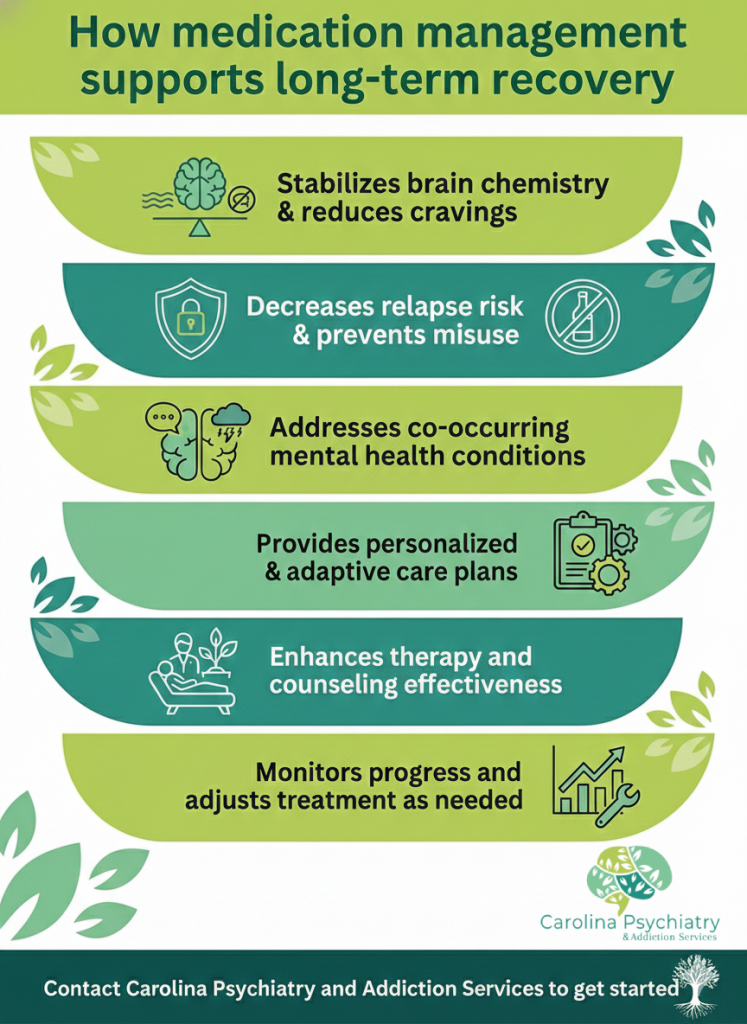
Medication management helps stabilize both the brain and the body.
For example, medications used in opioid addiction treatment (such as Suboxone) can reduce intense cravings and prevent painful withdrawal symptoms. Medications for alcohol use disorder (such as Campral) can decrease the urge to drink and help restore balance in brain chemistry.
When cravings and withdrawal symptoms are managed, individuals can focus more fully on therapy, rebuilding relationships, and developing healthy coping strategies. This type of stability creates a healthy space for healing.
Reducing Relapse Risk
Relapse is a common part of the recovery journey, especially without structured support. Stress, environmental triggers, and untreated mental health conditions can increase vulnerability.
Medication management plays a major role in reducing relapse risk by:
- Minimizing cravings
- Reducing impulsivity
- Supporting mood regulation
- Addressing anxiety and depression
- Providing ongoing medical accountability
Research consistently shows that individuals who participate in supervised medication management as part of addiction treatment have improved long-term outcomes compared to those who rely on abstinence alone.
Medical supervision also ensures that medications are adjusted if progress stalls or side effects emerge. This proactive approach helps prevent setbacks before they escalate.
Addressing Co-Occurring Mental Health Conditions
Many individuals struggling with substance use disorders also experience anxiety, depression, PTSD, or other mood disorders. These co-occurring conditions often fuel substance use and increase relapse risk.
Medication management allows providers to treat both addiction and underlying mental health conditions at the same time. When anxiety, depression, or trauma symptoms are properly managed, individuals are less likely to self-medicate with drugs or alcohol.
Integrated addiction treatment that includes medication management offers a more comprehensive path to recovery. By stabilizing mental health, individuals gain clarity, improved emotional regulation, and stronger resilience against triggers.
Personalized and Adaptive Care
There’s no universal recovery plan that works for everyone. Each person’s history, biology, and circumstances are different.
Medication management supports long-term recovery because it is personalized and adaptable. A medical professional can:
- Adjust medications as the brain heals
- Modify dosages based on response
- Taper medications safely when appropriate
- Introduce new treatment strategies if needed
This flexibility ensures that addiction treatment evolves alongside the patient’s progress.
Ongoing check-ins also provide opportunities to reinforce accountability and celebrate milestones. Recovery becomes a structured process rather than an isolated effort.
Strengthening the Overall Addiction Treatment Plan
Medication Management works best when it is part of a comprehensive addiction treatment program. Medications provide stability, but therapy and behavioral interventions build long-term coping skills.
When medications reduce cravings and emotional instability, patients are more engaged in:
- Individual therapy
- Group counseling
- Support groups
- Family counseling
- Life skills development
Medication management enhances the effectiveness of these services. It allows individuals to fully participate in the emotional and psychological work required for sustainable recovery.
Long-Term Monitoring and Continued Support
Recovery does not end after the first few months. Long-term recovery requires continued attention and care.
Medication management provides structured, ongoing monitoring that supports individuals through different stages of life. As stressors change or new challenges arise, medical professionals can reassess and adjust treatment plans.
This long-term partnership builds confidence and security. Patients know they are not navigating recovery alone. They have consistent medical guidance supporting their progress.
Over time, some individuals may taper medications under supervision. Others may continue maintenance treatment for extended periods. Both approaches can be effective when guided by a trained provider.
Dispelling Common Myths
Despite strong evidence supporting medication management in addiction treatment, misconceptions still exist.
One common myth is that using medication is “replacing one drug with another.” In reality, medications used in supervised addiction treatment are carefully prescribed, monitored, and designed to restore balance, not create euphoria.
Another myth is that medication management means someone is not truly in recovery. Recovery is defined by improved health, stability, and quality of life. When medications help individuals function safely and productively, they are supporting recovery, not undermining it.
Addiction is a medical condition, and treating it with medical tools is both appropriate and evidence-based.
Building a Foundation for Lasting Recovery
Long-term recovery requires more than motivation. It requires stability, structure, and professional support. Medication Management provides all three.
By reducing cravings, stabilizing brain chemistry, addressing co-occurring mental health conditions, and offering ongoing medical oversight, Medication Management strengthens every stage of addiction treatment.
When supervised by a qualified medical professional, it becomes a powerful tool for sustainable change.
Recovery is possible. With comprehensive addiction treatment that includes medication management, individuals can build a healthier, more stable future grounded in long-term success. Get in touch today to get started.

